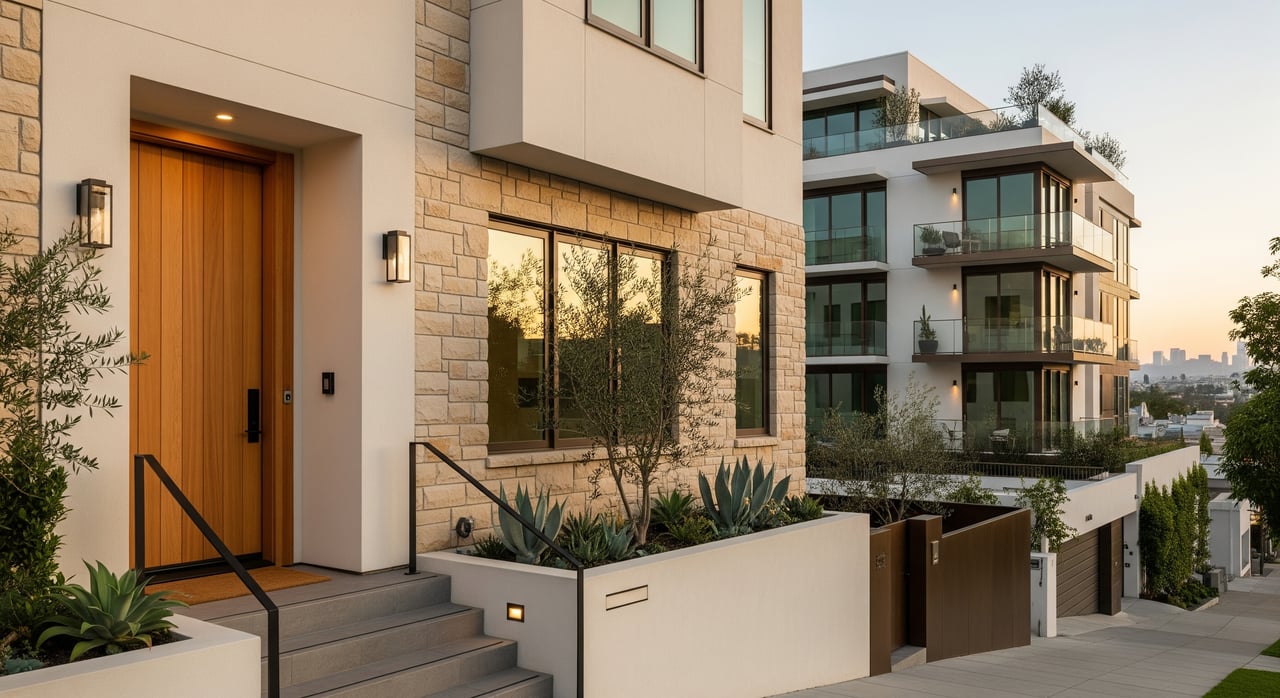
Condo Vs. Townhouse In North Hollywood
January 15, 2026
January 15, 2026
Thinking about buying in North Hollywood but torn between a condo and a townhouse? You’re not alone. Each option offers a different mix of ownership, maintenance, parking, and financing that can change your monthly costs and long‑term value. This guide explains how condos and townhomes work in NoHo, what to watch for in HOAs, and how to choose the best fit for your lifestyle and budget. Let’s dive in.
North Hollywood blends transit convenience with neighborhood energy. Around the Metro B Line station and the NoHo Arts District, you’ll find mid‑rise condos, stacked flats, and newer infill townhome communities. Buyers include many first‑timers, entertainment professionals, investors, and downsizers looking for efficient spaces near amenities and transit.
Recent development trends favor higher‑density projects near transit, while smaller townhome subdivisions appeal to buyers who want a fee‑simple feel with private entries and garages. Inventory can shift quickly by micro‑area, so it’s smart to compare options within the same building type and age when you tour.
A condominium owner typically holds title to the interior of the unit plus an undivided interest in common areas. The homeowners association handles most exterior maintenance and common systems. Your HOA dues fund this work.
A townhouse in NoHo can be structured in different legal ways. Some are condominium townhomes that function like condos, while others are fee‑simple or part of a Planned Unit Development where you own the lot and exterior. The legal form affects maintenance, insurance, and financing.
California’s Davis‑Stirling Common Interest Development Act governs how HOAs operate, the documents you receive, and owner rights. Understanding your specific project’s setup is essential before you write an offer.
Condo HOAs often cover building exterior, roof, common HVAC, elevators, landscaping, and a master insurance policy. Townhome HOAs may cover only common areas, not your roof or exterior. What dues include varies by project, so confirm in writing.
Request and review the full HOA package. Focus on CC&Rs, bylaws, rules, budgets, reserve studies, board minutes, insurance declarations, and any litigation disclosures. Ask about rental policies, pet rules, guest parking, and delinquency rates.
A healthy reserve fund lowers the odds of special assessments. Underfunded reserves or active litigation can impact financing and resale.
Condos typically offer assigned or deeded spaces in a subterranean or structured garage. Guest parking can be limited near busy corridors and may have strict rules. If you want EV charging, verify current availability and the HOA’s approval process for new chargers.
Townhouses more often include private, direct‑access garages and sometimes driveways. Street parking varies block by block. Always confirm the number of spaces you own or control and how guests are accommodated.
In many condos, the HOA manages exterior items like roof, paint, and common systems, which can reduce surprise repair costs for you. Dues might be higher because you’re pooling funds for large projects.
In many fee‑simple townhomes, you are responsible for your unit’s exterior and roof. Dues may be lower, but long‑term maintenance planning becomes your responsibility. Either way, the association’s reserve study and funding level matter.
Condos typically use an HO‑6 policy for the unit owner. This covers interior improvements, personal property, and liability, while the HOA’s master policy insures the building shell. Confirm whether the master policy is “bare walls” or “all‑in,” and note deductibles.
Fee‑simple townhomes usually require an HO‑3 policy that insures the structure and interior, similar to a single‑family home. The HOA usually carries liability and common‑area coverage only.
Earthquake policies are usually separate for both condos and townhomes. Review flood maps and local hazards to decide if you need additional coverage.
For condos, pay attention to water intrusion at balconies and windows, the condition of common systems, and elevator maintenance. The unit’s interior condition still matters, but exterior issues often tie back to HOA performance.
For townhomes, inspect roof condition, flashing, siding, drainage, and foundations, plus any shared walls. Ask for records of recent capital projects and compare them with the reserve study.
Always review HOA maintenance logs and recent project history. These details signal future costs and potential assessments.
Condos face project‑level scrutiny from lenders. Criteria often include owner‑occupancy ratios, budget strength, reserves, litigation status, and commercial space share. FHA and VA loans may require specific project approvals or spot approvals.
PUDs and fee‑simple townhomes are usually treated more like single‑family homes and may avoid condo project approval requirements. That can simplify underwriting.
Lenders count HOA dues as recurring debt, which affects your debt‑to‑income ratio. High dues can limit loan size, so weigh dues against what they cover to understand your total monthly housing cost.
California’s Proposition 13 limits base property tax increases, but expect a supplemental assessment after a purchase. Some newer projects may include special district taxes, often called Mello‑Roos, or bond assessments.
The City and County apply documentary transfer taxes at closing. Ask your agent and escrow officer to confirm current rates and how they apply to your transaction.
Condos often offer a lower entry price and amenity access near transit, which can broaden your buyer pool. On the flip side, higher dues or special assessments may deter some buyers, and litigation can slow sales.
Townhomes attract buyers seeking more privacy, a private entry, and a garage, offering a single‑family feel at a lower price point than many detached homes. Inventory can be tighter, so demand may hinge on micro‑location and recent comps.
Amenities like gyms, security, or rooftops can support higher resale in condo buildings but often come with higher dues. Compare price per square foot within similar age and type to avoid misleading comparisons.
Before touring
Documents to request
On‑site checks
Choose a condo if you want lower maintenance responsibility, amenity access, and a location near transit and dining. Expect to pay higher dues and to monitor the HOA’s financial health closely.
Choose a townhouse if you want more privacy, direct‑access parking, and the feel of a small home without a large yard. Budget for exterior upkeep and confirm exactly what the HOA maintains.
Either way, focus on the legal ownership form, HOA health, parking terms, insurance needs, and financing path. This clarity helps you compare true monthly costs and long‑term value.
Ready to compare specific buildings and townhome communities in NoHo? Schedule a free consultation with Sergei Hovsepyan to map your best options and Move With Confidence.
Stay up to date on the latest real estate trends.




Let’s make your next move the right one. I take pride in offering real guidance, clear communication, and a stress-free experience from start to finish. If you're ready to buy, sell, or just explore your options — I’m here to help.