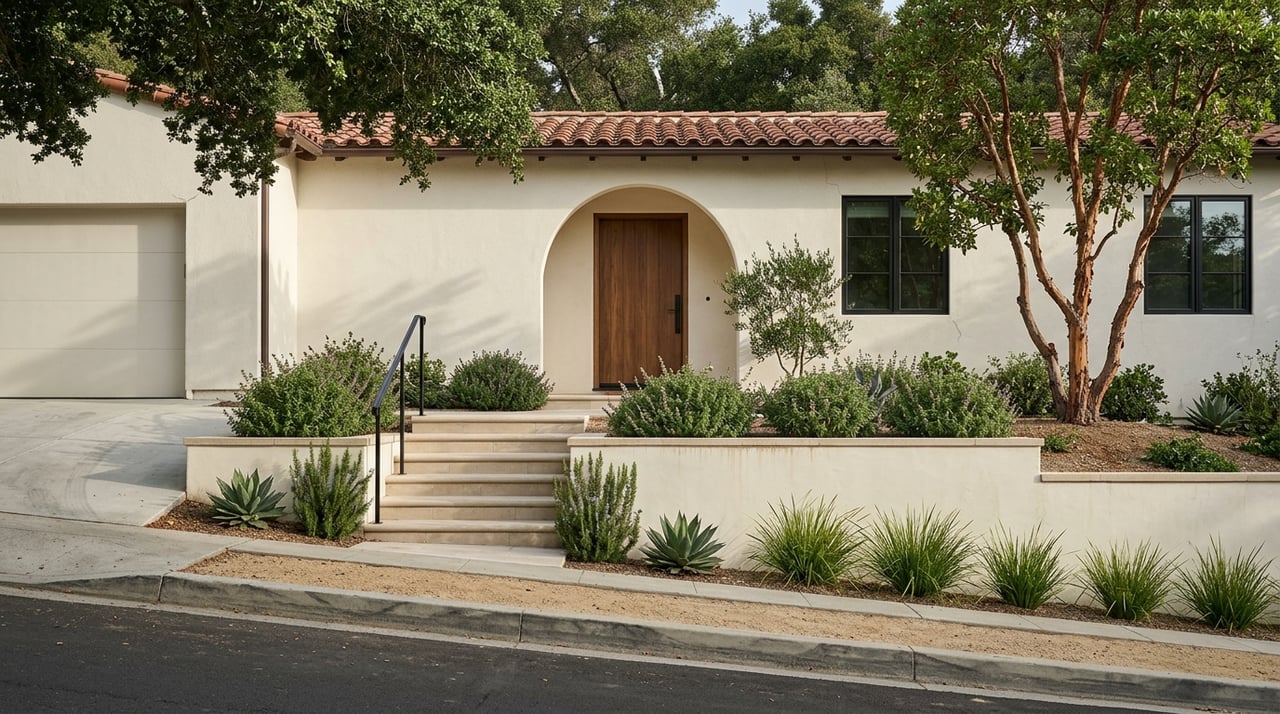
Quiet Valley Living: An Introduction To Tujunga
May 7, 2026
May 7, 2026
Looking for a Los Angeles neighborhood that feels a little quieter, a little more tucked away, and a little closer to the outdoors? Tujunga often stands out for exactly that reason. If you are thinking about buying, renting, selling, or investing here, it helps to understand what daily life actually looks like, how the area is laid out, and what gives it its distinct character. Let’s dive in.
Tujunga is in the northeast part of Los Angeles, about 15 miles from downtown, according to Los Angeles City Planning. Its setting is a big part of its appeal, with the Angeles National Forest, Little and Big Tujunga Canyons, Kagel Canyon, Deukmejian Wilderness Park, and part of the Verdugo Mountains surrounding the broader area.
That geography helps explain why Tujunga feels different from more central LA neighborhoods. City Planning describes a mix of flatland street grids and curving hillside roads, which creates a more secluded, slower-moving feel than many busier parts of the city.
Tujunga has deep local roots. Its history is tied to the Little Landers colony and the early growth of Commerce Avenue, with incorporation in 1925 and consolidation into Los Angeles in 1932.
You can still see that history in civic landmarks like Bolton Hall and the McGroarty home. These places help anchor the neighborhood’s identity and give Tujunga a sense of continuity that many buyers appreciate when they want a community with an established feel.
For buyers and sellers, one of the clearest takeaways is that Tujunga sits within a part of Los Angeles that remains largely low-rise and detached in character. The 2022 City Planning profile for the broader Sunland-Tujunga area shows that 68.9% of housing units are single-family, 28.9% are multifamily, and 1.9% are mobile or other units.
That matters because it helps set expectations. If you are searching in Tujunga, you are generally looking in an area shaped more by single-family homes and lower-density residential patterns than by dense apartment corridors.
The same city profile shows 12,628 owner-occupied units and 7,409 renter-occupied units in the broader plan area. In simple terms, that points to a primarily owner-occupied suburban market, which often appeals to buyers looking for a more settled residential environment.
Tujunga’s built environment is not just about housing type. It is also about style, scale, and how the community has grown over time.
A historic survey notes that many notable homes in the area were built with stone and rock from Tujunga Wash. In the older commercial district, the neighborhood still shows an early-20th-century pattern with modest-scale buildings, pedestrian orientation, mature street trees, and storefronts that serve daily local needs.
City planning policy also emphasizes preserving the area’s low-density, rural character and equestrian lifestyle. For you as a buyer or seller, that policy backdrop helps explain why parts of Tujunga feel less urbanized and more residential in tone than other LA neighborhoods.
Foothill Boulevard is the main commercial spine for the area. City Planning identifies it as a shallow band of commercial land mixed with multifamily housing, which makes it an important corridor for day-to-day convenience.
Historically, the old Commerce Avenue district served as the neighborhood’s commercial center. SurveyLA describes it as modest in scale and still occupied by neighborhood-serving businesses and restaurants, continuing a long tradition of everyday services in the area.
For residents, that means daily errands and casual stops tend to happen in a more local, neighborhood-scale setting rather than in a large urban core. That quieter pattern is part of what many people mean when they talk about Tujunga’s slower pace.
A few community anchors help define life in and around Tujunga.
The Sunland-Tujunga Branch Library at 7771 Foothill Boulevard offers parking, a bike rack, Wi-Fi, public computers, and language collections. McGroarty Park provides a small local recreation setting, while Bolton Hall Historical Museum and the McGroarty Cultural Art Center help preserve and express the area’s history and culture.
These are not flashy attractions, and that is part of the point. Tujunga’s appeal often comes from practical, local-serving places that support everyday routines and reinforce a close-to-home lifestyle.
One of Tujunga’s biggest lifestyle advantages is its relationship to open space. The nearby Angeles National Forest plays a major role in how the area feels.
The U.S. Forest Service describes Angeles National Forest as an urban national forest that gives surrounding communities a place to experience solitude and recreation. For many residents, that access adds a strong outdoors element to daily life and helps balance the realities of living within Los Angeles.
If you value proximity to trails, canyon roads, and a more natural setting, Tujunga offers a version of LA living that feels connected to the landscape in a very direct way.
If you are considering a move here, commute planning matters. City Planning notes that the 210 Freeway and Foothill Boulevard bisect the broader community plan area, while Big Tujunga Canyon Road, Sunland Boulevard, and La Tuna Canyon Road also help serve the area.
That road network gives drivers multiple ways to move through the foothill communities and connect outward. At the same time, Tujunga has long functioned more as a bus-and-car neighborhood than a rail-oriented one.
The community plan reported no Metrorail, Metrolink, or DASH lines in the area at the time of the plan. Current Metro service still reflects that pattern, with Line 90 connecting Downtown Los Angeles, Glendale, Sunland, Sun Valley, and North Hollywood Station, and Line 690 linking Tujunga with Pacoima, Sylmar, and Olive View Medical Center.
In practical terms, most households in the area plan around driving, with bus service serving as a transit backstop. City Planning’s health atlas also noted that the Sunland-Tujunga area had one of the lowest zero-vehicle household shares in Los Angeles, at about 1%, which reinforces the area’s long-standing car-first orientation.
Tujunga is not trying to be the center of everything, and that is exactly why some buyers love it. If you want a quieter residential environment, a lower-density feel, and easier access to foothill landscapes, this neighborhood may be worth a closer look.
It can also appeal to sellers whose homes benefit from that unique positioning. A property in Tujunga is often part of a lifestyle story that includes space, neighborhood character, and a setting shaped by hills, canyons, and local history.
For renters and investors, the broader housing mix also matters. While the area is primarily defined by single-family housing, the presence of multifamily units means there can be opportunities depending on your goals and budget.
If you are buying in Tujunga, it helps to focus on a few basics:
If you are selling, it helps to understand what buyers are often responding to here:
Neighborhoods like Tujunga reward local knowledge. On paper, it is part of Los Angeles. In real life, its setting, housing patterns, roads, and pace can make it feel very different from other parts of the city.
That is why working with someone who understands the foothill communities can make the process feel less stressful. Whether you are comparing home options, planning a sale, looking for a rental, or exploring an investment property, clear local insight helps you make smarter decisions with more confidence.
If you are thinking about your next move in Tujunga, Sergei Hovsepyan can help you navigate the market with patient, honest guidance and a local-first approach.
Stay up to date on the latest real estate trends.
Let’s make your next move the right one. I take pride in offering real guidance, clear communication, and a stress-free experience from start to finish. If you're ready to buy, sell, or just explore your options — I’m here to help.